Greylag goose
Season · much of the year · dawn and dusk
Grazing flocks on flood meadows, noisy lines at evening. Best from dike crowns at Dümmer and wet Weser pasture. Do not walk toward sitting birds to “complete” a photograph.
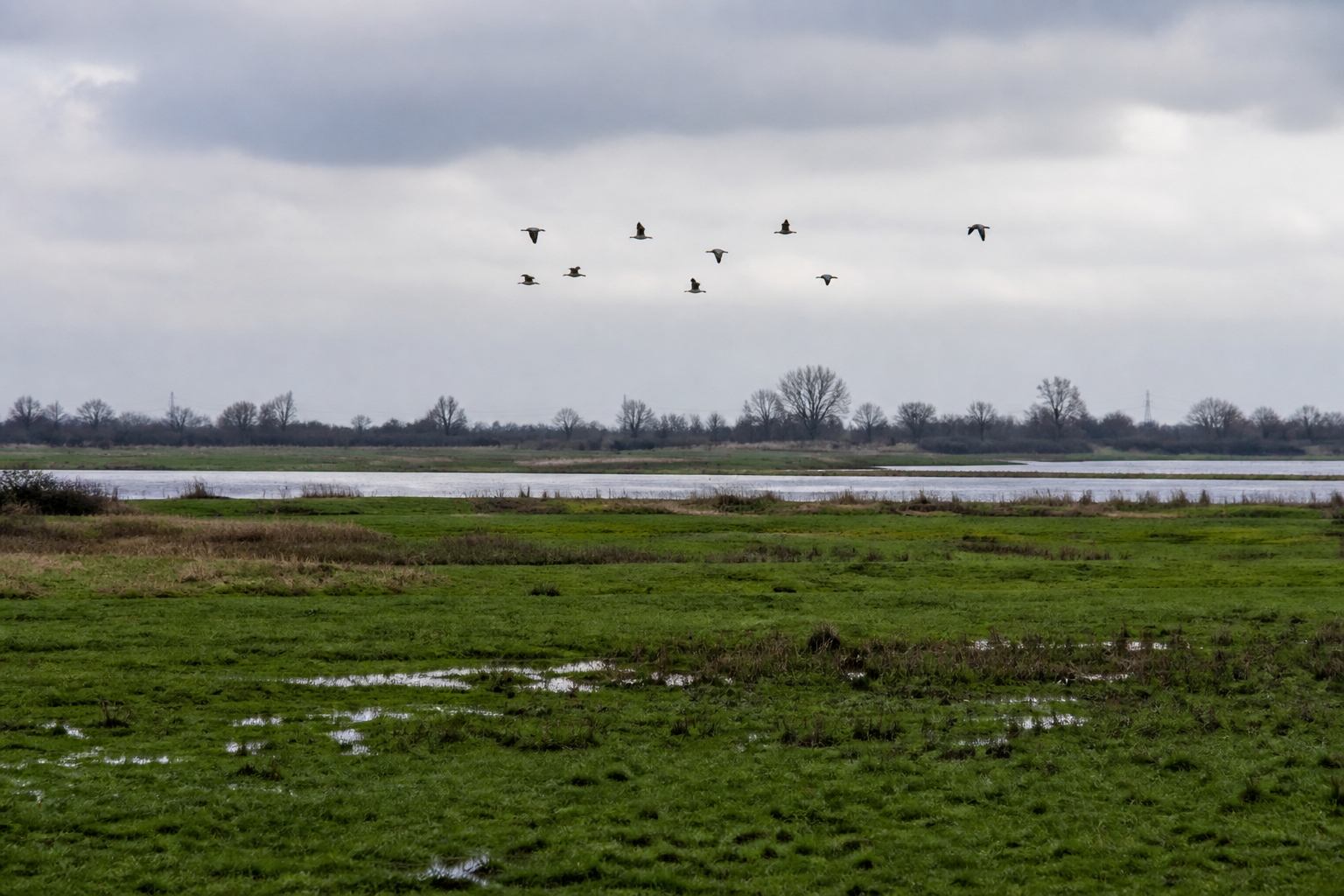
Quiet watching
The correct posture here is not a hunt. It is standing still on public earth while flocks use the private reed. Binoculars yes; playback calls no. If a bird lifts because of you, you were too close.
Season · much of the year · dawn and dusk
Grazing flocks on flood meadows, noisy lines at evening. Best from dike crowns at Dümmer and wet Weser pasture. Do not walk toward sitting birds to “complete” a photograph.
Season · March–April and October–November · morning
Passage over the plain, sometimes staging on wet fields. Keep the birds large in the sky and small in the frame. Autumn light is described in bronze September.
Season · year-round · still hours
Works ditches and reed edges. If it unfolds into slow flight, you have already been seen. Watch from the path used in the Dümmer dike notes.
Season · spring to autumn · rivers and clear ditches
A blue stitch, not a pose. More likely on Weser side-channels than on the open lake plate. Stand, wait, do not whistle.
The wetland is already full. Your job is to occupy less of it.
Nature park rules around Steinhuder Meer close some shallows for a reason. Dogs off-lead on the reed edge undo an hour of quiet. The glossary defines hide, Ramsar and reed belt if you want the vocabulary without the folklore.
Bring 8× or 10× binoculars, not a speaker. Dawn at Dümmer in October is worth more than a midday circuit in July if birds are the reason you came. Pair this page with the Reed Shore Route so you arrive on the dike instead of cutting through wet pasture.